In the heart of Laredo, Texas, where the Rio Grande winds through neighborhoods rich with culture and resilience, another story quietly unfolds—one of hardship, hunger, and homelessness. For many residents, daily survival is not just a struggle but a test of endurance. Yet amid these challenges, a powerful force of community compassion is growing. Food drives and outreach programs are stepping forward to bring not just meals, but hope, dignity, and second chances to Laredo’s homeless population.
This story matters because homelessness affects the entire community—its safety, health, and humanity. Understanding how local programs respond to this crisis can inspire action and empathy, while offering practical insights for anyone seeking to help.
 Youth Homelessness in Laredo: Understanding the Growing Challenge
The Growing Challenge of Homelessness in Laredo
Homelessness in Laredo has become more visible in recent years, driven by rising rents, job loss, and limited access to mental health services. The Laredo Homeless Coalition estimates that hundreds of individuals experience homelessness at some point each year, including families, veterans, and the elderly. Shelters often operate at full capacity, leaving many to sleep in public spaces or vehicles.
The economic ripple effects of the pandemic further deepened inequality, pushing vulnerable residents closer to homelessness. This ongoing challenge underscores the importance of organized community action—where food drives and outreach programs fill the gaps that larger systems often overlook.
The Power of Food Drives: Feeding More Than Bodies
Food drives play a vital role in ensuring that no one in Laredo goes hungry. Beyond collecting canned goods and non-perishable items, these efforts have evolved into coordinated systems of care. Volunteers organize donation events across schools, churches, and local businesses, often during the holiday season when needs spike. What makes these drives so impactful is their ability to connect people from every walk of life. Donors, volunteers, and recipients become part of a shared mission that strengthens community bonds. For many homeless individuals, a warm meal represents more than nourishment—it is a reminder that they are seen, valued, and not forgotten.
One of the most successful aspects of Laredo’s food drives is their adaptability. Organizers use mobile pantries to reach those who cannot visit distribution centers, ensuring food security extends to those living in tents or makeshift shelters. The coordination between civic organizations and local volunteers has created an efficient network that distributes thousands of meals each month. These simple acts of giving restore faith and dignity to those most in need.
 From Streets to Stability: How Housing Programs Are Transforming Lives in Laredo
Outreach Programs: Meeting People Where They Are
While food drives provide immediate relief, outreach programs work to address the deeper causes of homelessness. Outreach teams in Laredo focus on building relationships with those living on the streets. They distribute hygiene kits, blankets, and information about housing and health services. Their approach is compassionate yet practical—recognizing that rebuilding a life takes time, trust, and consistent support.
Outreach workers often face challenging environments but approach each encounter with empathy and respect. They understand that homelessness is not a choice but often the result of systemic barriers such as mental illness, domestic violence, or job insecurity. Through partnerships with local shelters and nonprofits, these programs connect individuals with case management, counseling, and employment opportunities. In doing so, they help many take the first steps toward long-term stability.
The Role of Local Organizations in Sustaining Hope
Laredo’s nonprofit sector is a driving force behind the city’s humanitarian progress. Local faith-based groups, civic clubs, and community centers work tirelessly to maintain food pantries, organize meal distributions, and provide emergency shelter. Their success relies heavily on collaboration. Many programs operate under the Laredo Homeless Coalition, a unified network dedicated to reducing homelessness through advocacy, data collection, and direct assistance.
These organizations understand that one-time help is not enough. Sustainable change comes from coordinated strategies that combine immediate care with long-term planning. Job readiness training, mental health counseling, and rental assistance programs are now key components of their outreach. Each service brings the city closer to breaking the cycle of homelessness, proving that compassion paired with structure can drive measurable change.
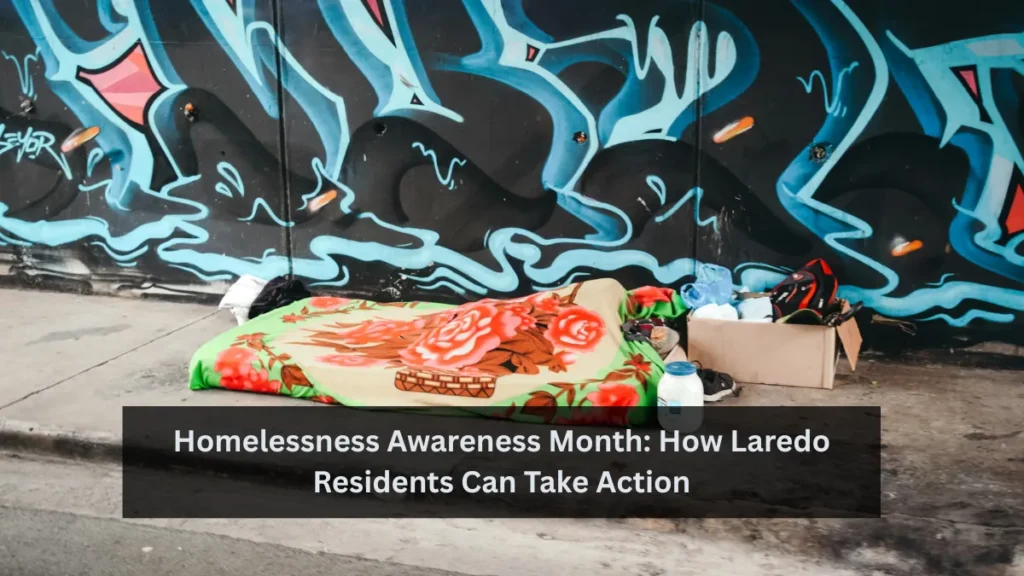
 Homelessness Awareness Month: How Laredo Residents Can Take Action
How Volunteers Are Transforming Lives
Behind every food drive and outreach effort are volunteers—ordinary people who devote their time to extraordinary work. Teachers, students, retirees, and families gather to sort food, prepare meals, or deliver supplies. Their dedication reflects Laredo’s community spirit, where helping one another is deeply rooted in culture and faith. Volunteers often say the experience changes them too, giving them a deeper appreciation for life’s small comforts and a renewed sense of purpose.
Many outreach volunteers go beyond meal distribution, offering emotional support and conversation. Their presence provides comfort to those who feel invisible. This human connection often inspires individuals experiencing homelessness to seek help, trust services, and rebuild their lives. The impact of volunteerism cannot be measured solely by numbers—it is reflected in the smiles, gratitude, and renewed hope of those served.
The Importance of Partnerships Between Government and Community
Addressing homelessness effectively requires coordination between public and private sectors. The City of Laredo works alongside local nonprofits to allocate funding, provide facilities, and support policy initiatives aimed at affordable housing and public health. However, government resources alone cannot solve the issue. Community-led programs fill essential gaps by offering flexibility and personal engagement that bureaucratic systems often lack.
For example, community coalitions collaborate with healthcare providers to deliver mobile medical units to underserved areas. This partnership ensures that homeless individuals receive vital care, from vaccinations to chronic disease management. By aligning efforts, both government and community groups maximize their impact and ensure no one is left behind. These collaborations prove that lasting change occurs when compassion and policy work hand in hand.
How Residents Can Get Involved
Every resident of Laredo has the power to make a difference. Supporting food drives by donating non-perishable items, volunteering at meal distributions, or organizing small neighborhood collections can have a ripple effect. Individuals can also contribute through monetary donations to local shelters or by spreading awareness on social media. For those unable to give financially, time and advocacy are equally valuable. Joining community cleanups, attending city meetings about homelessness, or simply learning more about the issue are meaningful ways to contribute.
Another effective step is to approach the issue with empathy. Simple gestures—offering a meal, a kind word, or information about available services—can uplift someone struggling on the streets. Change begins when ordinary citizens choose to act with compassion and awareness.
Overcoming Challenges: Sustaining Momentum
Despite the success of Laredo’s food drives and outreach programs, sustaining momentum remains a challenge. Economic pressures, limited funding, and volunteer fatigue often strain resources. Programs must continually innovate to stay effective—whether by partnering with local businesses for food surplus donations or developing mobile technology to track and coordinate aid more efficiently. Maintaining transparency and accountability also strengthens donor confidence and ensures that assistance reaches those most in need.
Community education is equally vital. Encouraging empathy and reducing stigma around homelessness helps create a more inclusive environment. When residents view homelessness not as a failure but as a shared responsibility, real progress becomes possible. The ongoing commitment of local leaders and citizens ensures that compassion remains at the heart of Laredo’s response.
A Vision for the Future
Laredo’s collective efforts represent more than temporary relief—they embody a vision of a compassionate, resilient city. As new challenges emerge, from economic uncertainty to climate-related crises, the community’s strength lies in unity.
Food drives and outreach programs serve as powerful examples of what is possible when people care enough to act. With sustained investment, innovation, and empathy, Laredo can continue to transform lives and inspire other communities facing similar struggles.
Conclusion: Turning Compassion into Action
Laredo’s story is one of hope born from hardship. Food drives and outreach programs have proven that meaningful change begins at the community level. Every meal served, every hand extended, and every voice raised for justice brings the city closer to ending homelessness.
The lesson is clear—collective compassion creates resilience. By continuing to support and expand these initiatives, Laredo can move from responding to homelessness to preventing it altogether. Hope, when shared, becomes a force strong enough to change lives.
FAQs
How do food drives help Laredo’s homeless community?
They provide essential meals and build connections between residents and people experiencing homelessness.
What items are most useful to donate in food drives?
Canned goods, dried foods, hygiene items, and bottled water are the most requested essentials.
How can I volunteer for a Laredo outreach program?
Contact local shelters or community centers that coordinate regular volunteer schedules.
Why is homelessness increasing in Laredo?
Rising rents, unemployment, and limited access to mental health care contribute to growing homelessness.
What long-term solutions can reduce homelessness?
Affordable housing, job training, and accessible healthcare are key to breaking the cycle of homelessness.